Describe the job once
You explain the damage, door size, and what the door is doing. We use that to connect you with a contractor who handles garage door replacement.
Serving Moreno Valley, California & surrounding areas
Calls answered around the clock
Describe what happened once and get connected with a local contractor in Moreno Valley who handles residential garage door replacement.
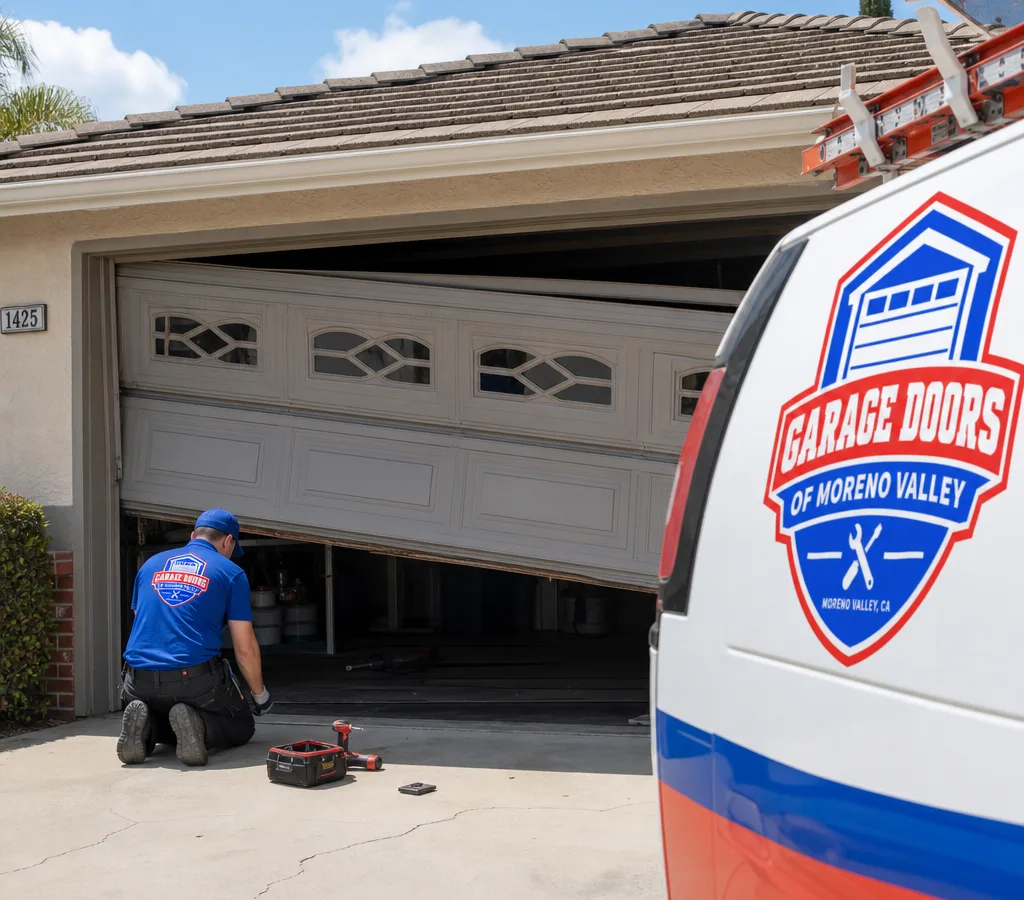
If you're looking to replace a garage door, you're usually dealing with one of two situations: the door is damaged enough that repair doesn't make sense, or you want a different door style, insulation level, or window layout. Either way, a proper garage door replacement is more than swapping panels. The new door has to match the opening, track geometry, spring system, and opener limits so the door runs smoothly and safely.
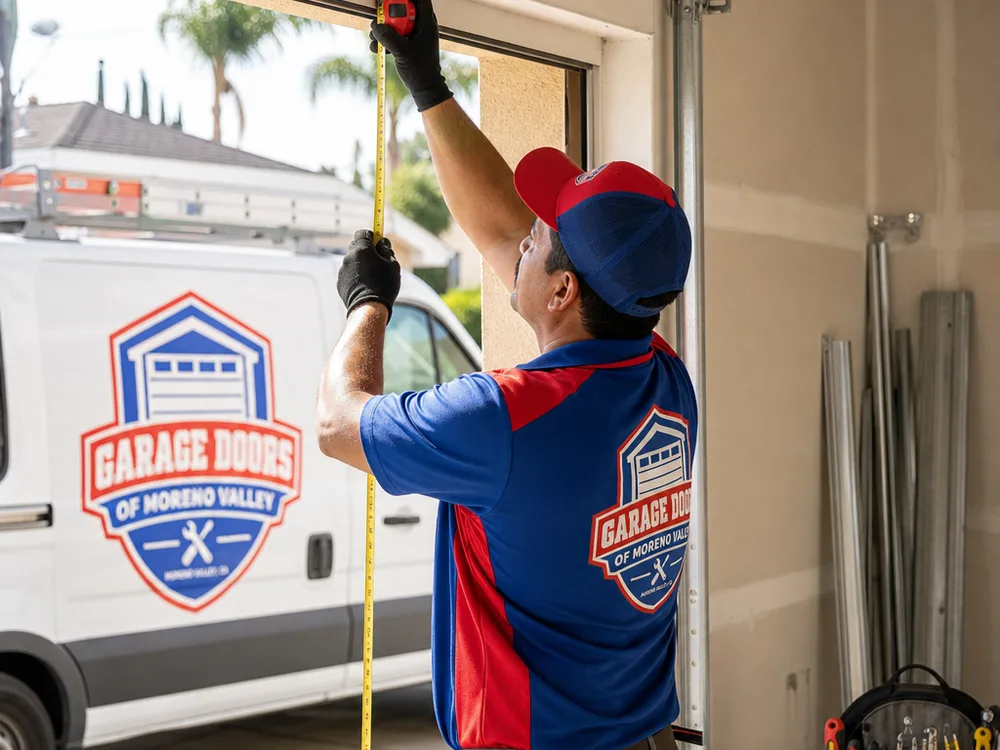
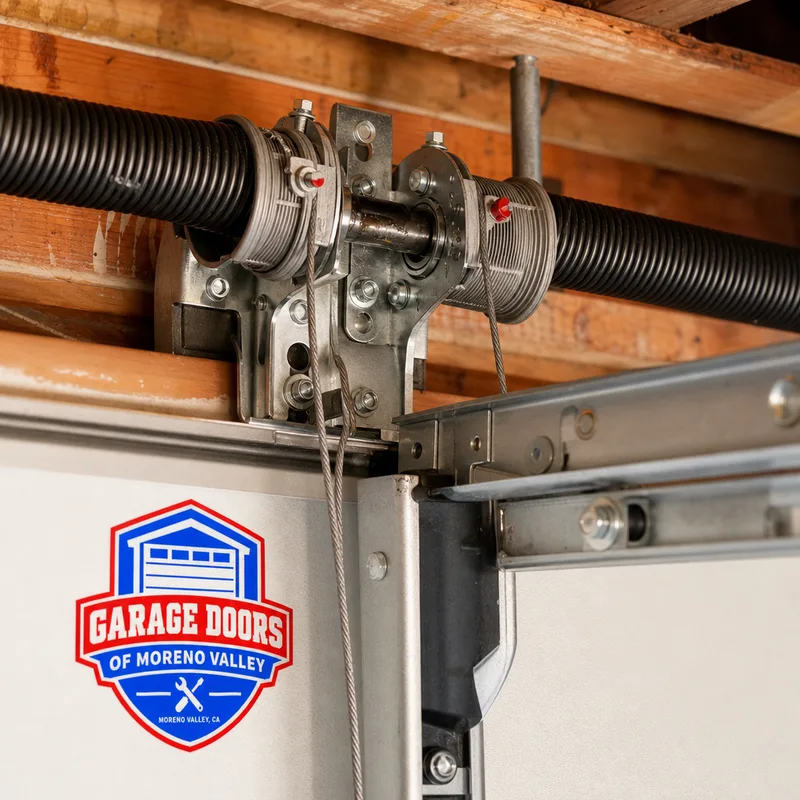
A residential garage door replacement typically includes removing the existing door sections, disconnecting hardware and springs, and inspecting the mounting points (flag brackets, track supports, header area). The contractor will confirm the door size (common sectional sizes are 8 to 9 feet wide for single-car and 16 feet wide for two-car, with 7 or 8-foot heights), track radius, and headroom/side room clearances. They'll also check whether the current setup uses torsion springs mounted above the door or extension springs along the tracks, because the replacement parts and setup differ.
In Moreno Valley, many garages are finished with drywall and have storage racks or water heaters close to the door path. That can affect track placement, jamb brackets, and how the opener arm travels. If a door is being replaced after impact (vehicle bump, wind-related panel flex, or a bent track), the contractor will usually confirm that the jambs are square and the horizontal tracks are level so the new door doesn't bind.
If you're not sure whether you need full replacement or targeted work, describing what's happening on the phone helps: Is the door stuck halfway? Is one side higher than the other? Are panels creased or separated at the hinges? Have you heard a loud snap from the garage (often spring-related)? Garage Doors of Moreno Valley takes those details and connects you with a local contractor who can evaluate the safest path forward.
If your issue is primarily operational (door won't open, reverses, makes grinding noises), a contractor may recommend repair rather than replacement, and many homeowners start by talking through garage door repair first to confirm what actually needs to be done.
You explain the damage, door size, and what the door is doing. We use that to connect you with a contractor who handles garage door replacement.
You're connected with an independent contractor who serves Moreno Valley and nearby areas, not someone routed from far away.
You speak directly with the contractor, ask questions, and decide whether to move forward after you hear their recommendation.
Some doors can be handled with garage door panel replacement, while others need a full door system. The contractor can confirm what applies to your door.
We'll ask the right basics up front—door size, spring type if known, opener brand, and what changed—so the contractor starts with clear information.
Tell us whether the door is damaged, stuck, loud, off-track, or simply outdated, and whether you're considering a full replacement or a section/panel replacement.
You're put in touch with a contractor who handles residential garage door replacement in Moreno Valley.
Expect questions about door size, insulation needs, window layout, color, and whether existing tracks, springs, and opener can be reused or should be replaced.
The door sections, tracks (if needed), rollers, hinges, and spring system are installed and adjusted so the door is balanced and travels smoothly.
The contractor tests manual balance, travel limits, and opener safety reversal, then shows you basic maintenance points like lubrication and visual checks.
If the door is bent, heavy, or sitting crooked in the opening, stop running it and describe what you're seeing by phone. We'll connect you with a local contractor who can take it from there.
CALL NOW: (951) 647-5944
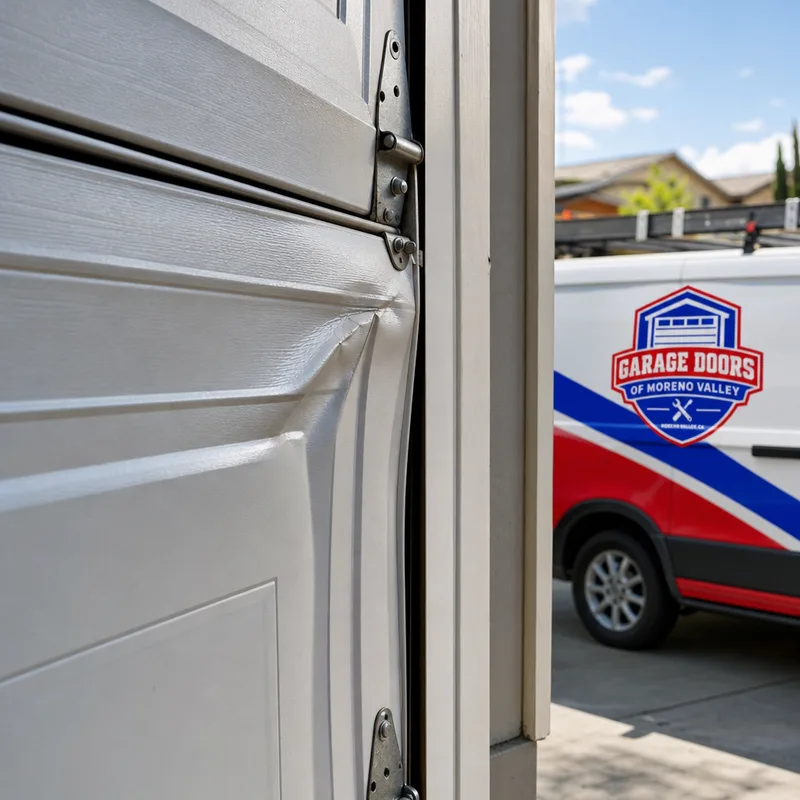
Panel replacement can make sense when the damage is limited to one or two sections and the rest of the door, hinges, and stiles are still straight and operating correctly. Full replacement is more common when multiple panels are bent, the door is racked (out of square), the skin is separating around hinge locations, or the door is an older style where matching sections are hard to source. The contractor you're connected with will usually ask for the door's width and height, the panel design, and where the damage is located to judge whether a replacement section is realistic.
Leave the door in place and avoid operating it if it looks crooked in the tracks, has a dangling cable, or feels unusually heavy. A heavy door can indicate a spring issue, and forcing it can bend tracks or damage the opener. If you need to secure the opening, the safest step is usually to keep the door closed and lock it from the inside if you have a manual lock, then explain the situation when you call so the contractor arrives prepared.
The fastest way to get routed to the right contractor is to share the door size (width and height), whether it's a single or double door, and what type of spring system you have if you know (torsion above the door or extension along the tracks). Also mention whether the opener is attached and working, and describe the main problem: impact damage, rot on a wood door, repeated off-track issues, or cosmetic updates. A couple of clear photos on your phone can help when you're talking with the contractor.
Sometimes, but it depends on compatibility and condition. Tracks need to match door height and track radius, and they must be straight and securely supported. Springs are sized to the door's weight, so changing from an uninsulated door to an insulated door (or changing materials) often changes spring requirements. Openers also have limits and may need adjustments to travel and force settings. The contractor will evaluate what can stay and what should be updated so the new door runs correctly.
For a typical sectional door replacement with standard hardware, the physical installation is often completed in a single visit, but the exact time depends on whether tracks are replaced, whether framing needs correction, and whether the opener needs reconfiguration. Custom doors, unusual headroom constraints, or damage around the opening can add steps. The contractor can give you a realistic plan after confirming measurements and the condition of the existing setup.
Most homeowners choose between steel sectional doors (often with optional insulation), composite or wood-look designs, and different window layouts. You'll also hear about insulation construction (single-layer, double-layer, or sandwich construction), wind load considerations for your location, and hardware grade (hinges, rollers, and track thickness). If the garage is attached to living space, insulation and perimeter seals are usually part of the conversation.
Replacing the door can help if the current door is twisted, the sections are deformed, or the hinge locations have been stressed so the rollers don't track correctly. But repeated off-track problems can also come from track alignment, loose mounting, worn rollers, or a spring balance issue. A contractor will check the root cause first so the new door doesn't inherit the same problem.
You call, describe what's going on, and we connect you with a local contractor who handles garage door replacement and related work. You can ask the contractor questions, get their recommendation, and decide whether to proceed based on what they find.
Tell us what happened and what the door is doing now, and we'll connect you with a local Moreno Valley contractor who can assess the opening and handle the replacement.